


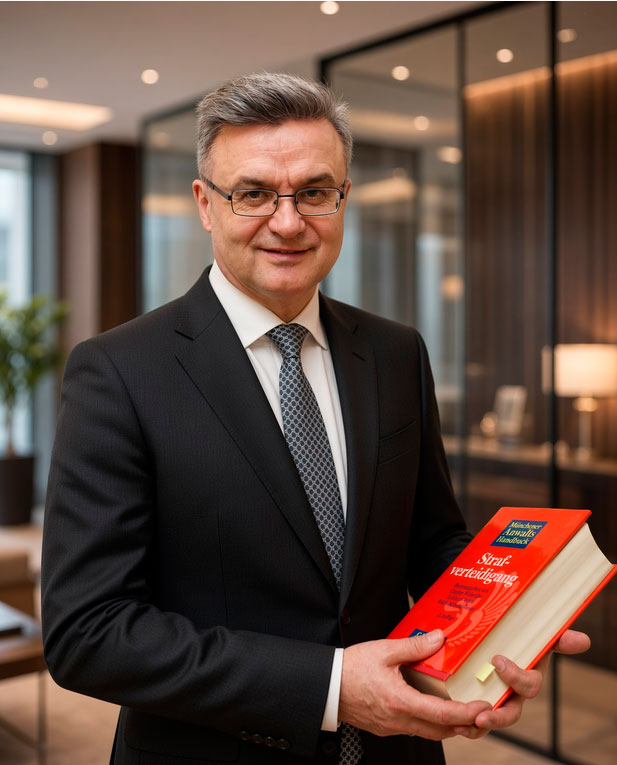
Inheritance law covers two situations: planning during one's lifetime and settling the estate after a death. Our law firm in Berlin-Charlottenburg advises testators and represents heirs, persons entitled to a compulsory share and executors throughout Germany – including estates with assets abroad. We work in German, Russian, Ukrainian and English.
Wills and contracts of inheritance
A will determines who receives what. Without a will, statutory succession applies – and it often does not reflect what the deceased would have wanted.
- Handwritten or notarised will (§§ 2231, 2247 BGB)
- Joint will and the "Berlin will" (§ 2269 BGB) with binding effect (§ 2271 BGB)
- Contract of inheritance (§§ 2274 ff. BGB), legacies and conditions
- Review and amendment of existing dispositions
Statutory succession and certificate of inheritance
Without a will, relatives inherit in orders of succession (§§ 1924 ff. BGB) and the spouse inherits alongside them (§ 1931 BGB). The right to inherit is usually proven by a certificate of inheritance (Erbschein) from the probate court.
- Identifying the heirs and their shares
- Application for a certificate of inheritance (§ 2353 BGB) and the European Certificate of Succession
- Tracing estate assets and unknown co-heirs
In detail: Inheritance in Germany.
Compulsory share and community of heirs
Disinherited children, spouses and – if the deceased had no children – parents are entitled to the compulsory share. Several heirs form a community of heirs that can only manage and divide the estate jointly.
- Compulsory share amounting to half the statutory share (§ 2303 BGB)
- Right to information and valuation (§ 2314 BGB), supplementary compulsory share for gifts (§ 2325 BGB)
- Management and division of the community of heirs (§§ 2038, 2042 BGB)
- Defence against unjustified claims by co-heirs and persons entitled to a compulsory share
Accepting and disclaiming an inheritance
Heirs are liable for the deceased's debts. If the estate is over-indebted, the inheritance can be disclaimed before the probate court – usually within six weeks, or six months where there is a foreign connection (§§ 1944, 1945 BGB).
- Review of the estate before the deadline expires
- Disclaimer and challenge of an acceptance
- Limiting liability through estate administration or estate insolvency (§ 1975 BGB)
In detail: Disclaiming an inheritance in Germany.
Execution of wills
An executor carries out the deceased's wishes and manages the estate (§§ 2197 ff. BGB). We advise executors and represent heirs in dealings with the executor.
- Inventory of the estate and accounting (§§ 2215, 2218 BGB)
- Settlement and distribution of the estate
- Removal of the executor for good cause (§ 2227 BGB)
Lifetime transfers and estates abroad
Transferring assets during one's lifetime can prevent disputes among heirs and allows the inheritance and gift tax allowances to be used more than once; they apply for ten-year periods (§§ 14, 16 ErbStG). We coordinate tax questions with your tax adviser.
- Anticipated succession, gifts with usufruct or a right of residence
- Business succession
- Applicable law and choice of law under the EU Succession Regulation
- Estates with real estate or bank accounts abroad; coordination with marriage contracts under family law
How we work
- Initial consultation: we clarify your situation, your goals and running deadlines, for example for a disclaimer.
- Strategy: you learn which rights you have, which documents are needed and whether an agreement is possible.
- Representation: we file applications with the probate court, negotiate with co-heirs and represent you in court.
We agree on the format and fee with you before we start.
All articles in this section
A complete list of guides and cases from our practice in this area of law.
- Disclaim Inheritance in Germany: Deadlines, Form, Effects
- Inheritance in Germany: Who Inherits and Probate Steps
- German Inheritance Tax: Tax Classes and Tax-Free Allowances
- Inheriting in Germany as an Heir Living Abroad: Erbschein and Co-Heirs
- The Compulsory Share (Pflichtteil) in German Inheritance Law
- It's Hard to Live Without Lawyers – and Even Harder to Die Without Them (Berliner Testament)
- Where to Find a “Missed” Inheritance?
- Information About the Estate When a Third Party Manages the Assets
- Disclaiming an Inheritance in Germany: Deadlines, Form and Consequences
Frequently Asked Questions
How long do I have to disclaim an inheritance?
Six weeks from the time you learn of the inheritance and the reason for your succession. Six months if the deceased's last residence was only abroad or if you are abroad when the period begins (§ 1944 BGB).
How large is the compulsory share?
The compulsory share (Pflichtteil) is half of the statutory share (§ 2303 BGB). It is a monetary claim against the heirs, not a share in the estate itself.
Is a handwritten will valid?
Yes, if it is written and signed entirely by hand (§ 2247 BGB). Place and date should be stated. A will typed on a computer and merely signed is invalid.
Do I always need a certificate of inheritance?
Not always. If there is a notarised will or a contract of inheritance, the land registry and banks often accept the disposition together with the probate court's opening record.
Which inheritance law applies if assets are abroad?
Within the EU, the law of the country of the deceased's last habitual residence generally applies. However, the deceased may choose the law of their nationality (Art. 21, 22 EU Succession Regulation).
Until when can I claim the compulsory share?
The claim becomes time-barred after three years. The period begins at the end of the year in which you learned of the inheritance and of your disinheritance (§§ 195, 199 BGB).
How much does the initial consultation cost?
It depends on the nature and scope of your matter – from a short free assessment to a full initial consultation. Fees are agreed individually: every case is discussed personally with the lawyer, and we always tell you the cost before the consultation begins. We do not give general legal information without reviewing your specific case. If you then instruct us in the same matter, the fee for the initial consultation is credited against the further fees (§ 34(2) RVG).