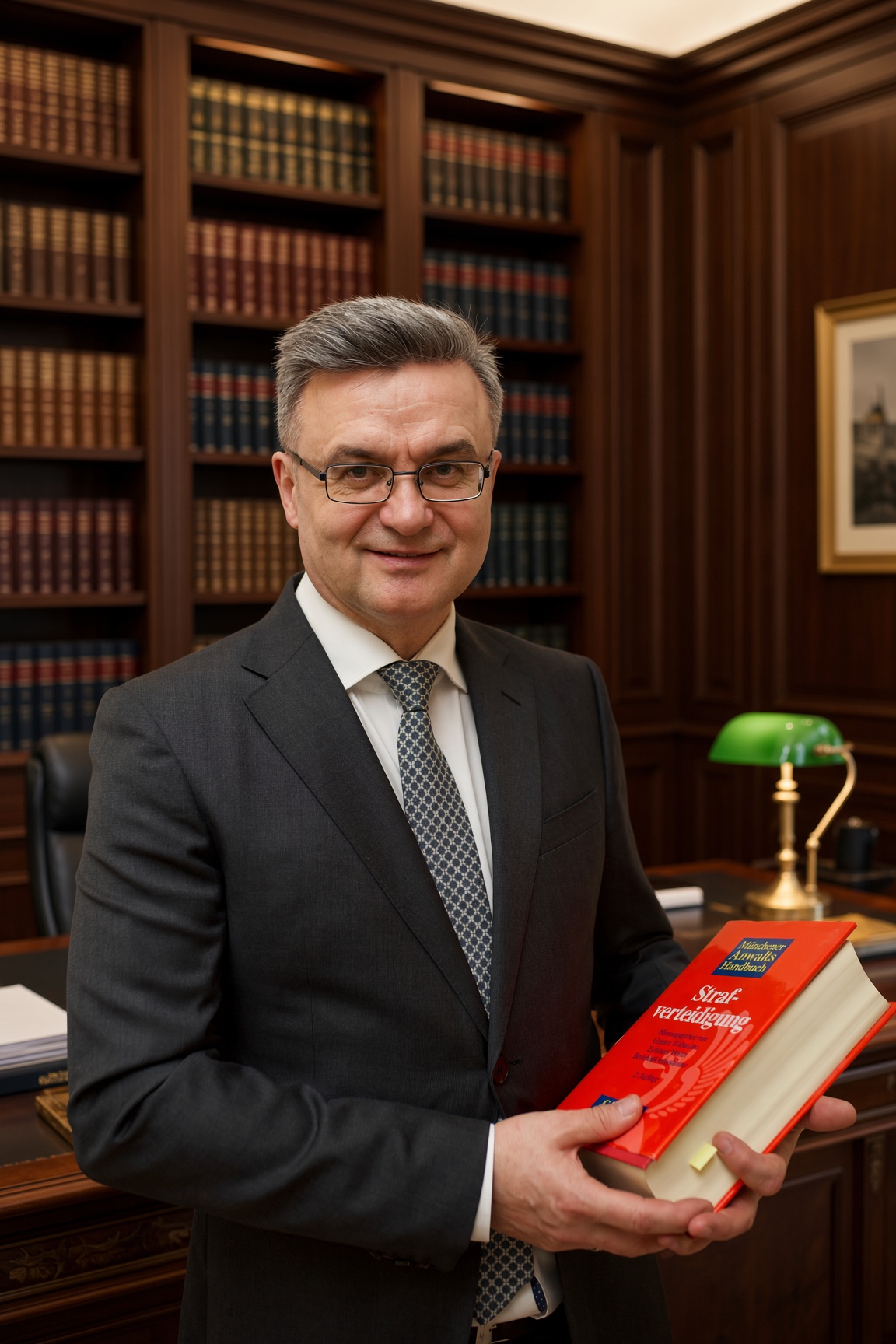
“Marriage and the family shall enjoy the special protection of the state” – this is how Article 6 of the German Basic Law (GG) begins. The care and upbringing of children are the natural right of parents and a duty primarily incumbent upon them; the state watches over them in the performance of this duty (Art. 6 para. 2 GG). An adoption case from our firm shows what this supervisory role can look like in practice.
The family under supervision
Caring for and bringing up children is a natural right of parents and, at the same time, a duty that rests primarily on them, while state bodies monitor how these duties are performed. Parental custody is of particular importance in family law: under § 1626 BGB it comprises care for the child’s person and property. If the child is born in wedlock, both parents exercise custody. If the parents were not married when the child was born, the mother initially has sole custody; for the father to share it, both parents must make declarations of joint custody, which are recorded by the youth welfare office (Jugendamt) or a notary. Parents may decide independently on all questions of their children’s upbringing and development; the state intervenes only if the child’s welfare is at risk. The BGB provides that direct contact with both parents serves the child’s welfare.
Important: parental custody
Under § 1626 BGB, parental custody comprises care for the child’s person and care for the child’s property.
If a step-parent wishes to adopt his or her spouse’s child (stepchild adoption, § 1741 para. 2 sentence 3 BGB), the family court examines whether the adoption serves the child’s welfare and whether a parent-child relationship can be expected to develop between the adopting parent and the child (§ 1741 para. 1 BGB). The Jugendamt gives a professional statement on this (§ 189 FamFG). Our clients, the Wolf family, experienced how stressful these proceedings can be for a family.
A family with a history
Both Katharina and Viktor Wolf had a separation behind them. Katharina’s former partner had withdrawn when he learned of the pregnancy and was never seen again. Viktor’s first marriage had broken down because of constant conflict; after the divorce, his son stayed with him. Eight years ago Katharina and Viktor married, and from then on two children lived in the family: Katharina’s son Alexander, whom Viktor had helped raise since the age of seven, and Viktor’s son Michael, a year younger than Alexander. Michael also had a mother, who unintentionally played an important role in this story.
At the divorce, Michael’s mother Tatyana agreed that her son would live with his father. The parents agreed on contact arrangements, but for a whole year the mother did not take up a single meeting. She then applied for a court contact order; Viktor did not object, and the court set contact days. Over the next two years the mother exercised contact only once and then applied to the court again, claiming that Michael’s father was obstructing contact. It was precisely this history that was later used against Viktor in the adoption proceedings.
Be my dad!
When the family decided that Viktor should adopt Alexander, the boy was fifteen. The adoption application must be notarised (§ 1752 para. 2 BGB); the notary filed it with the family court. Among other things, the consent of the child is required – from the age of 14 the child gives it himself, with the approval of his legal representative (§ 1746 para. 1 sentence 3 BGB) – and, as a rule, the consent of the biological father, which the court can replace under certain conditions (§§ 1747, 1748 BGB). The court also obtains a professional statement from the Jugendamt (§ 189 FamFG). For this purpose, a member of the Jugendamt’s staff visited the family one evening.
The visit lasted about forty minutes – a coffee, a conversation about family life, a handshake on leaving. Shortly afterwards, a negative statement from the Jugendamt was before the court. It said that there was no close emotional bond between Alexander and Viktor; moreover, Viktor was not encouraging contact between his son Michael and his mother and was obstructing the court contact orders. It recommended waiting a year until Alexander turned sixteen. Yet the wishes of a fifteen-year-old are already legally decisive: from the age of 14, an adoption is not possible at all without the child’s own consent.
The family turned to our firm. After reviewing the statement and talking to all family members, our lawyer considered the Jugendamt’s assessment insufficiently substantiated. In her submission to the court, she pointed out that no individual conversations had been held with Alexander, his stepbrother, his mother and his stepfather, so the conclusions lacked a sound basis. Regarding the allegation that Viktor was obstructing contact, she showed that the mother had not contacted either Michael or Viktor for years despite the court orders. The court then scheduled a hearing.
The judge conducted the hearing very critically. She reproached Alexander for poor German because he used a few English expressions (he attends an English-language grammar school) and asked why he had said at the beginning: “Mr Wolf wants to adopt me.” Our lawyer pointed out several times that a teenager appearing in court for the first time naturally chooses a formal tone.
During the break, the lawyer prepared the family for the rest of the hearing and advised them to behave naturally despite the tense atmosphere. About an hour after the hearing, the judge asked the family into her office: “I have changed my opinion of your family. Congratulations on your son – and congratulations on your father!” The case shows that a negative statement by the Jugendamt is not the last word – what counts is what is presented and proven in the court proceedings.
All rights reserved. Copying or republishing this article requires a link to the original source.