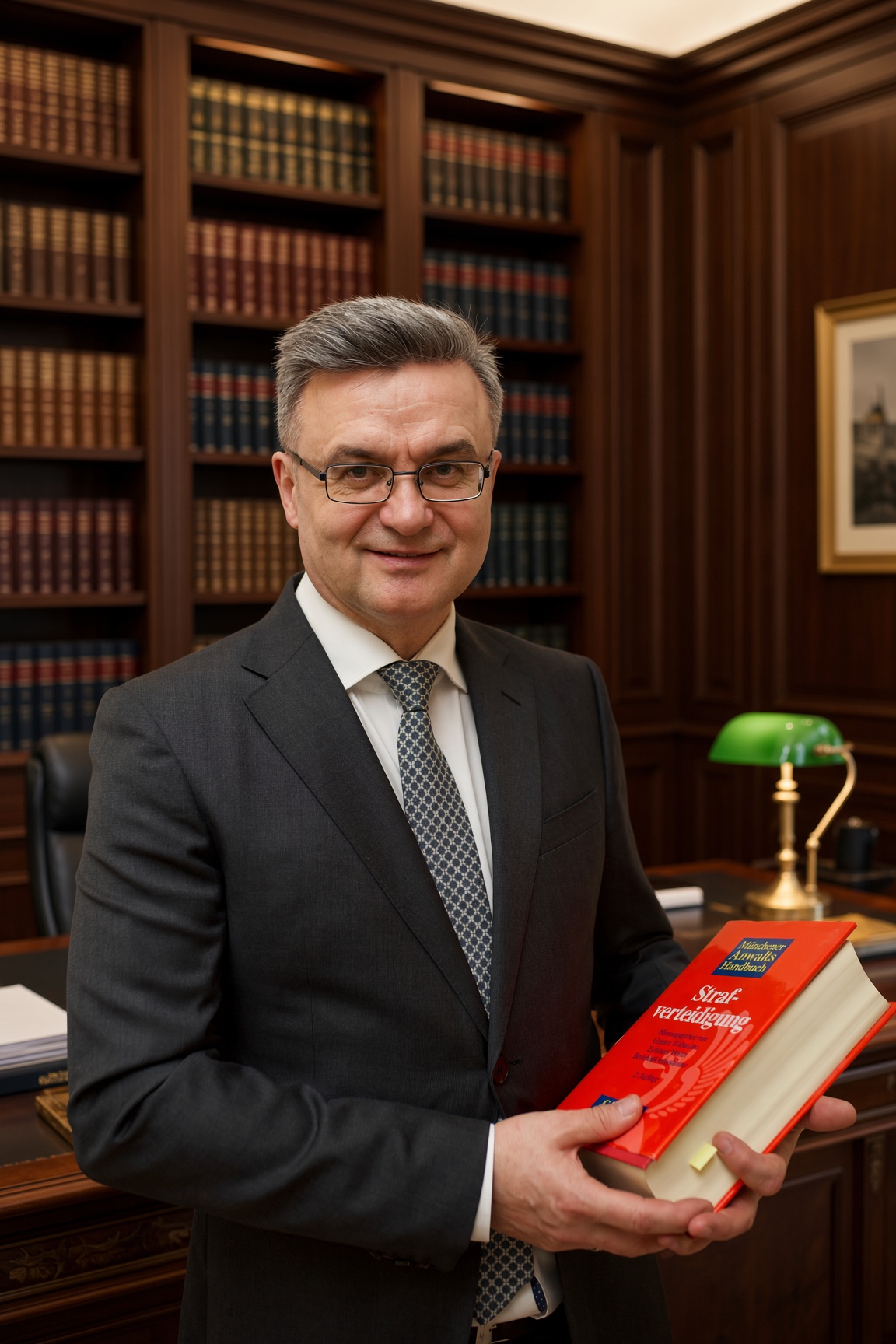
Sergei P., a German citizen, belongs to the category of people who, thanks to entrepreneurial talent and luck, managed to secure both their own future and that of their children. Along with his fortune, Sergei wanted to secure Russian citizenship for his son as well, in addition to the German citizenship he already held. And while retaining dual citizenship poses no problem at all for adults granted late-resettler status, their minor children are only allowed to keep it for eight years of residence in Germany, after which — once they turn 18 — they must give up one of their citizenships. In German law, this is known as "citizenship with a burden" (Staatsangehörigkeit mit Auflage). That's the law. But is there really nothing that can be done about it?
In the Third Circle
Dual Citizenship
Since 2024, Germany has allowed most naturalizing citizens to keep their previous citizenship — though whether the previous citizenship is actually retained depends on the law of the country of origin (§ 10 StAG).
Our client's story began with a prejudice against lawyers who happen to speak Russian, sometimes referred to colloquially as "Russian lawyers." Although every lawyer licensed to practice German law in Germany is, by definition, a German lawyer, prejudice often wins out anyway. The stereotype of the "Russian" lawyer as an unqualified opportunist leads some people to seek help instead from "trustworthy" native German lawyers. Reality, however, doesn't bend to prejudice.
When Sergei's son turned 18 and started receiving letters from officials reminding him that he needed to make a choice, Sergei consulted a lawyer. Sergei's first lawyer was a "German" lawyer, whose name will remain confidential for reasons of professional ethics. Having taken on the case, our colleague thought it best to write inquiries to officials demanding explanations of why things worked this way and what the purpose was. When a lawyer asks officials that kind of question, it can hardly provoke anything but a smirk. The officials answered the lawyer's questions patiently, but with a biting edge. And indeed, all the information is right there in the statutes and regulations, and a lawyer is expected to know and be able to work with the relevant codes. Unprofessional conduct by lawyers who are not competent in certain areas of law, yet take it upon themselves to represent a client's interests, can cause irreparable harm. The client, of course, is entitled to sue that lawyer for damages, but by then the client's original problem usually can no longer be fixed. Fortunately, Sergei noticed the oddities in how his case was being handled in time and switched lawyers.
The second lawyer's conduct was beyond reproach — judging by the documents, everything he did was entirely correct. But here our client's own prejudice came into play, and the difference in mentality made itself felt. "German" lawyers are often characterized by a cool, businesslike approach to a case, without unnecessary meetings or unnecessary words exchanged with the client. Things proceed in their own way, and if the client trusts the lawyer, the client is expected to simply trust them and not pester them with their presence. Our fellow countrymen, by contrast, often grow anxious if left without attention for a while, feeling as though something has gone wrong, or that they've simply been forgotten. Another distinguishing feature is that a lawyer with no experience of life and work in the former Soviet countries has no real sense of how the bureaucratic system actually works there, or how to reconcile documents issued by, say, Kazakh officials with the requirements of German authorities. The burden of gathering the evidence then falls entirely on the client's own shoulders. Long silences in communication and confusion over where to obtain the necessary documents eventually brought Sergei to our law firm.
As a result of the previous lawyer's efforts, Sergei's son had obtained a deferral of the requirement to renounce one of his citizenships. It was now up to our firm's lawyers to take things further.
The Right Strategy Is the Key to Success
One possible avenue for keeping the second citizenship was the impossibility of complying due to circumstances beyond one's control. Article 23 of Russia's Law on Citizenship allows renunciation of citizenship only if the applicant has no outstanding obligations to third parties or the state. One such obstacle to fulfilling the renunciation requirement could be that Sergei's son had not served in the Russian army and therefore could not renounce his citizenship on that basis. Sergei had already provided this kind of certificate, along with copies of his call-up notices, to his previous lawyer. But what our colleague failed to consider was how such a certificate would be perceived by German officials. Since call-up notices are sent to a specific address, this could raise a suspicion that our client's son actually had a permanent residence in Russia — after all, if a person has no registered address there, they wouldn't even be on the military registration office's radar. Our lawyers put a hold on further communication with the officials on this matter until our client could obtain a certificate from the housing management office confirming that his son had no permanent registration in Moscow, and that he had deregistered before leaving to settle permanently in Germany. Also on our advice, Sergei approached the military registration office for clarification of what his son would face if he failed to fulfill his military duty. Yes, there is a law that sets out the applicable penalties, but for the purpose of persuading German officials, it would be far more effective to have an explanation from the executive authority actually prepared to enforce those rules, rather than a mere description drawn from the legislation itself.
When we requested the file on Sergei's son from the authority that had issued the decision granting citizenship with a burden, we discovered that the records had been lost. This logically raised the question: where, then, was the original authority's decision granting citizenship with a burden in the first place? This was another fact working in our favor. Even though the decision had already entered into force, we needed to make sure that there were actual grounds for it and that the original document genuinely existed.
In addition, we identified further procedural grounds for challenging this decision. The authority that had issued the original decision no longer had jurisdiction. Sergei's son had since changed his place of residence, meaning that the question of his renunciation should now be decided by the authority responsible for his new place of registration. This gave us a genuine opportunity to counter the demand to renounce Russian citizenship. But our lawyers' main argument rested on the impossibility of renouncing Russian citizenship due to his unfulfilled military duty and the risk of entering Russian territory given the threat of criminal prosecution for evading conscription.
It was now time to settle on an overall strategy for the case. Our firm's lawyers had all the necessary documents in hand, amounting to a solid body of evidence. But who should make the first move? We explained to the client that we saw no point in taking the initiative ourselves. It is the officials' job to pursue enforcement of a given decision. And unless a fine for non-compliance was imposed, or proceedings to revoke German citizenship were initiated, our client's interests would be best served by a wait-and-see approach. Sometimes it's better to run out the clock. As long as no one at the relevant authorities raised the issue, the statute of limitations kept ticking away. At a certain point, we would be able to argue that the requirement to renounce Russian citizenship was void due to the expiration of the limitation period. At the time, the circumstances favored this strategy: the influx of refugees was pushing other immigration matters to the back burner, and officials were, in all likelihood, unlikely to have much time to spare for our client's son's second citizenship in the years to come.
Once we presented our client with the strategy we had developed, along with an explanation of every possible risk, Sergei was pleasantly surprised by the thoroughness of our lawyers' approach and by the fact that, at every stage of gathering documents in Russia, he received clear instructions on exactly which authorities and which type of documents would be needed. It's much easier for a client to follow clear instructions than to be left guessing about some abstract "body of evidence," which clients of other lawyers are often left to piece together entirely on their own. As of today, based on the latest information, our strategy has fully proven itself. Two years have now passed since Sergei first came to us. The officials seem to have forgotten all about his son. But should they suddenly remember, we have all the evidence needed to show that their demand cannot be fulfilled due to objective circumstances beyond his control.
Frequently Asked Questions
What is "citizenship with a burden" for the children of late resettlers in Germany?
It refers to a situation where a minor child holding dual citizenship is required, after turning 18 and having lived in Germany for 8 years, to renounce one of their two citizenships.
Can being unable to fulfill military duty in another country be grounds for keeping that country's citizenship?
Yes — if that country's law only permits renunciation of citizenship when there are no outstanding obligations, and the person has not completed military service, this can serve as a lawful obstacle to renunciation.
Is it always best to respond immediately to an authority's demand to renounce a previous citizenship?
Not always — sometimes a considered wait-and-see strategy, such as waiting out the statute of limitations or verifying whether the authority that issued the original decision still has jurisdiction, can prove more advantageous than immediate action.
All rights reserved. Copying or republishing this article requires a link to the original source.