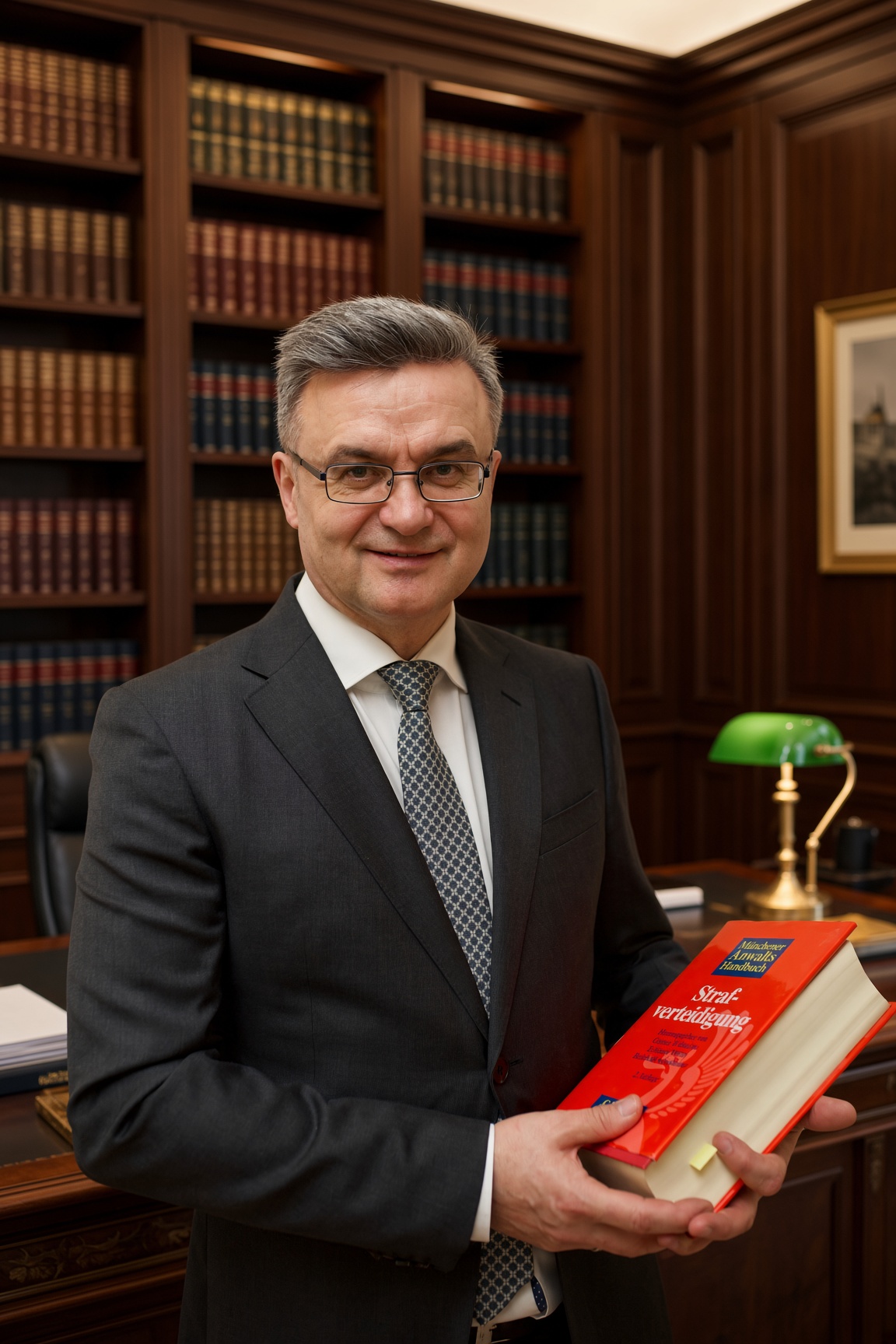
In Germany, the institution of marriage enjoys special protection under the state and is safeguarded by the Constitution. Article 6(1) of the Basic Law (German: Grundgesetz) states: "Marriage and the family shall enjoy the special protection of the state." Virtually every essential aspect of family legal relations in Germany — including entering into marriage, the marriage itself, and its dissolution — falls under Book Four of the German Civil Code (Bürgerliches Gesetzbuch, BGB). As a matter of law, a marriage only becomes legally valid once it is registered with the registry office (German: Standesamt). It should be said right away that divorce under German law differs substantially from the process in the CIS countries. The first key difference: a marriage cannot be dissolved through a local registry office — divorce always goes through the courts, with a lawyer's involvement mandatory regardless of whether the spouses actually disagree about anything. Sobering statistics show that in Germany every second marriage ends in divorce, and family courts are busy — often overloaded — which explains the comparatively long duration of divorce proceedings.
Under § 1569 of the German Civil Code (BGB), as a general rule, each spouse must provide for their own maintenance after divorce. The law does, however, provide for certain exceptions, in which one spouse may claim maintenance from the other. The most common examples of such exceptions are: maintenance claimed because the spouse is caring for or raising a joint child up to the child's third birthday (§ 1570 BGB); maintenance claimed because the spouse cannot find work due to physical or mental illness (§ 1572 BGB); and maintenance claimed until the completion of education interrupted during the marriage (§ 1575 BGB), among others. A former spouse may also claim support if they cannot find suitable work and/or cannot maintain the standard of living they had during the marriage (§ 1573 BGB). It should be noted that if the spouse receiving maintenance remarries, the former spouse's obligation to pay it ends.
Important at Divorce
Under § 1569 BGB, as a general rule, each spouse must provide for their own maintenance after divorce.
A mandatory part of divorce proceedings in Germany is the so-called pension equalization (German: Versorgungsausgleich), under which the pension entitlements the spouses "earned" during the marriage are split equally. This legal instrument exists under German civil law to equalize the spouses' pensions, above all in marriages where one spouse spent a long time running the household and/or raising children and, for lack of their own pension contributions, could not provide for their own retirement. The court also examines property disputes between the spouses, such as which spouse gets to use the shared apartment, how furniture, household items, and appliances are divided, and how other property acquired during the official period of the marriage — which is split equally between the spouses — is to be divided. This principle does not apply to couples who have entered into a marital agreement.
Clients often come to our law firm seeking help with matters governed by German family law. Such requests reach us at various stages of the divorce process. It also happens that our lawyer's task is to challenge, before a higher court, a first-instance ruling that has already been handed down. This article tells the story of one such case from our practice.
A middle-aged woman came to us — let's call her Olga. Olga's life took a completely unexpected turn, and after 25 years of a fairly carefree family life, she found herself alone. Her children were already grown and building their own lives, while her husband, owing to changed personal circumstances, decided to leave the family. Olga accepted this turn of events as calmly as she could and, realizing that "tears won't solve anything," decided to act — her everyday expenses demanded to be paid, mercilessly. The trouble was that, since her husband had always earned a good living, she had long since abandoned the fairly promising career she had once started. To be entirely honest, she had not worked in about twenty years and could barely even picture how one goes about it. So the woman had no choice but to accept the very first job offer that came her way — specifically, a part-time position as a shift manager at a nearby supermarket. Once it became clear that her husband was leaving the family and intended to file for divorce, he — apparently moved by a brief flicker of a sense of duty toward the life partner with whom he had spent no less than 25 years — signed an agreement with Olga on his own initiative. Under its terms, he undertook to transfer 700 euros a month to his former wife. It should be noted that the agreement made no mention anywhere of this sum being treated as fulfilling any maintenance obligation toward the former wife. Setting aside all the drama of Olga's situation, this at least gave her some guarantee of financial stability. It soon turned out, however, that her relief had been premature. Within a few months, her former husband seemed to have forgotten both about his former family and about the obligations he had taken on under the signed document. The payments simply stopped arriving in the woman's account, and after several attempts to settle the matter amicably, she decided to hire a lawyer and go to court.
Unfortunately, the matter could not be resolved through the courts at that time. Olga, with the help of the lawyer representing her then, first filed suit with a general civil court. Her claim was soon dismissed there on formal grounds — it had been filed with the wrong court. The correct court in this case was the family court. This misunderstanding may have arisen because the agreement between the former spouses never mentioned that the sum due to Olga after the divorce was a form of fulfilling the maintenance obligation toward the former wife. The lawyer the woman had retained at the time, misreading the document, had therefore gone "to the wrong address."
The second step was to file with the family court. Possibly because of improperly framed claims, the court this time issued a ruling against her on the merits. The court's decision found that Olga was receiving state benefits and was also earning an income, so her total income corresponded to the subsistence minimum. Our future client might well have given up and abandoned her search for justice, had new circumstances not intervened. Having worked at her job for less than six months, she decided to move to another city to be closer to her parents. That left her with no salary at all, while state benefits were clearly not enough, and rent still had to be paid... In this difficult situation, the woman came to our law firm for legal help and support.
Our lawyer listened carefully to Olga's sad story and explained that the necessary legal step in her situation was to appeal to a higher court to have her maintenance case reviewed. In the appeal, our lawyer set out in detail the circumstances of the spouses' life together and presented evidence that our client had been unable to build a career of her own, since for practically the entire marriage she had done nothing but support her husband, raise the children, and run the household. Because of this substantial career break, Olga was now unable to find well-paid work matching her qualifications, which is precisely why she could in no way maintain the standard of living she had enjoyed for years during the marriage. We proposed that the maintenance be calculated based on her ex-husband's income. As we had expected, the appellate court upheld our appeal and ruled on the merits: Olga was awarded a fixed sum of maintenance for the two preceding years and the following three years, which her ex-husband was to transfer to her account in the near future. Fortunately, the happy ending to this story was not long in coming. The sum awarded to Olga was successfully transferred by her ex-husband to her account within a single month, in three instalments.
All that remains for us to say is that divorce and the breakdown of families have become a sad reality of our times. Unfortunately, whether former spouses maintain a decent, amicable relationship is not up to us. What we can guarantee, as true professionals in our field, is help in asserting all of our clients' lawful rights and interests, together with knowledgeable, comprehensive legal advice and professional support.
All rights reserved. Copying or republishing this article requires a link to the original source.