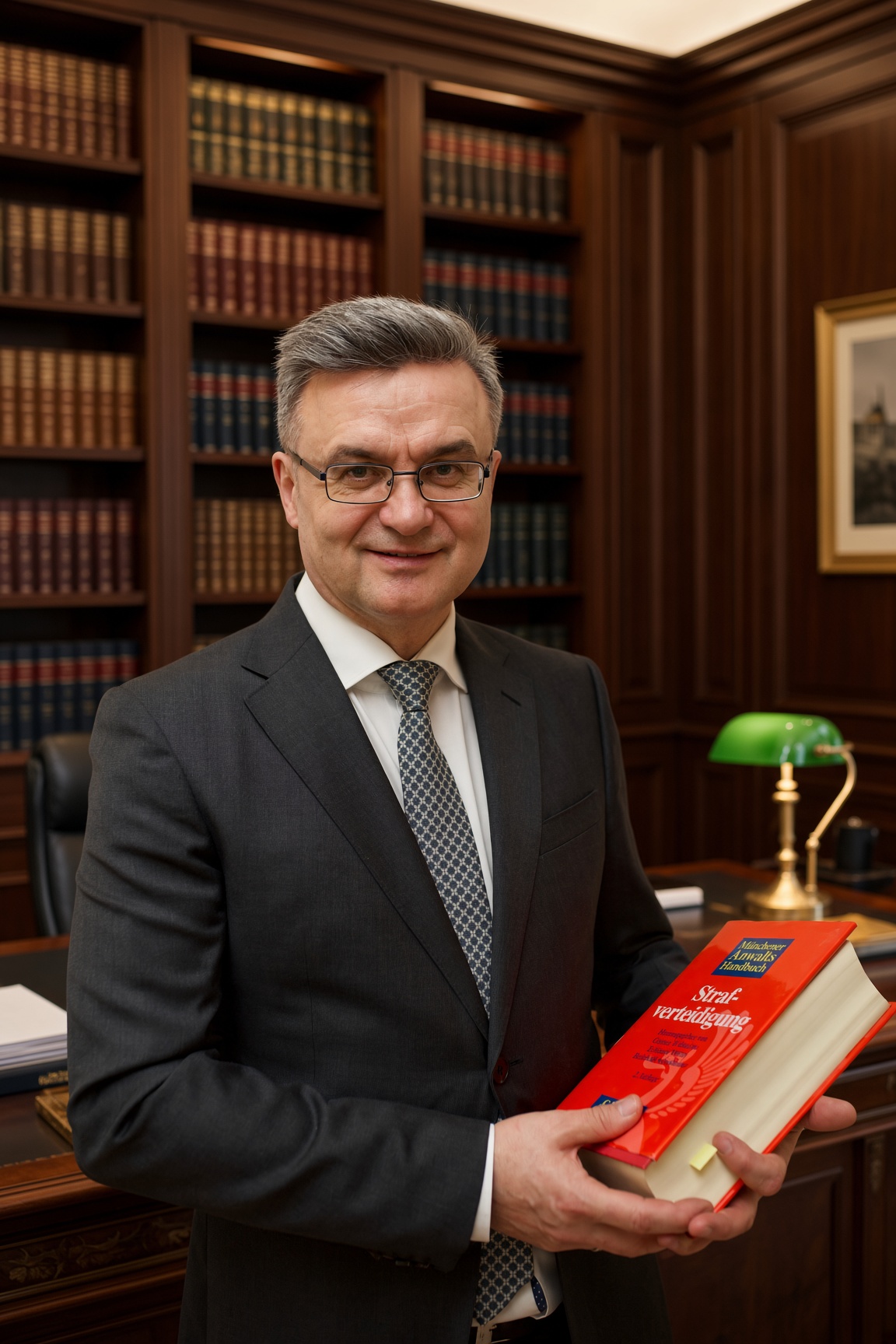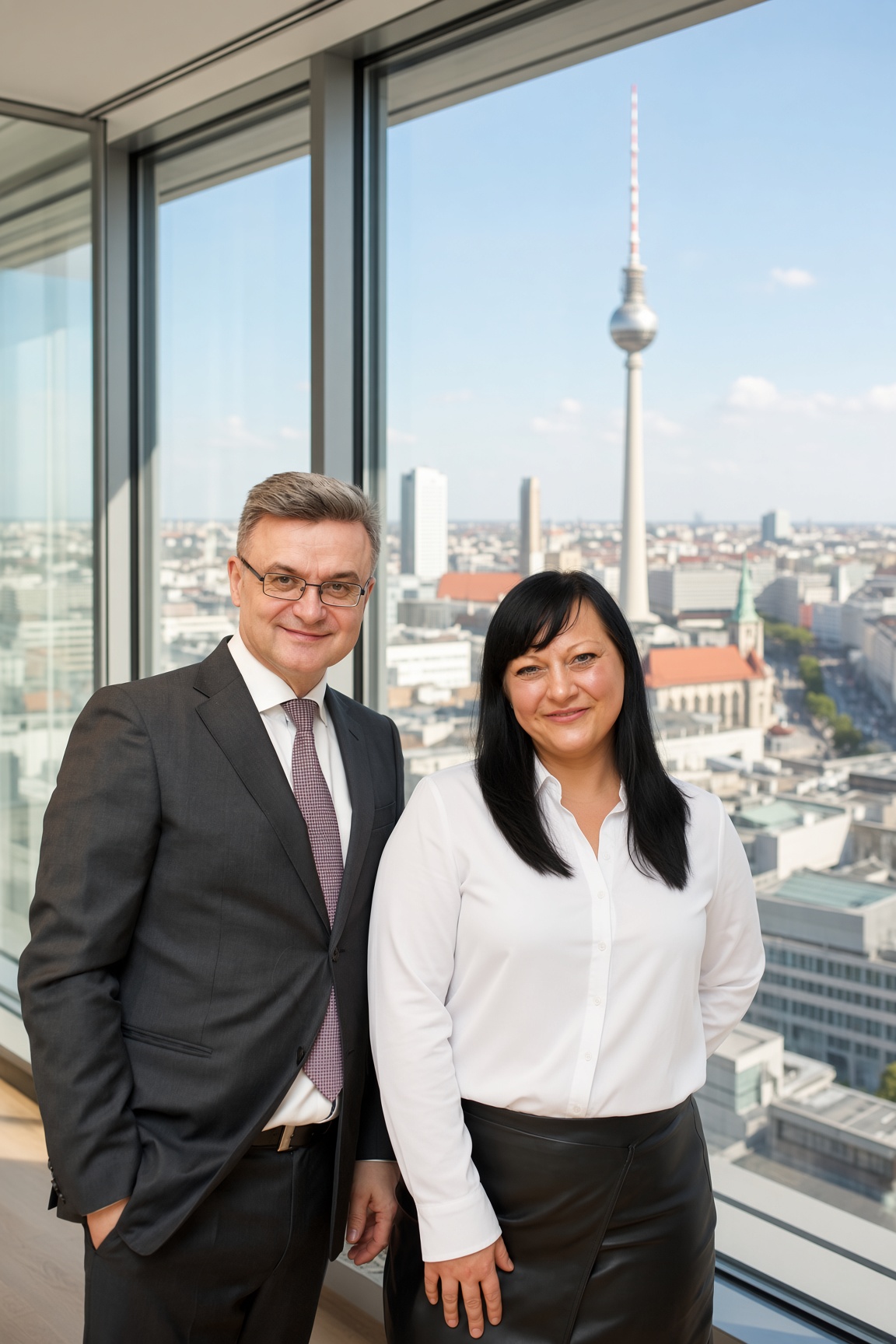
On a cold winter day in Berlin, with fog wrapping around the streets, the family life of Anna and Mikhail Ivanov once again found itself under threat. Mikhail, a successful architect, and Anna, his devoted wife, were confronted with news that threatened to shatter their small world.
One morning, Anna held in her hands a letter that turned her life upside down. In it, Anna's former colleague, Vyacheslav Kuznetsov, claimed that Mikhail was not the biological father of their son, Daniil. "Daniil is my child, and I demand that this fact be recognized," Vyacheslav wrote.
Mikhail was stunned. Anna insisted that Vyacheslav had been nothing more than a fleeting infatuation from her past, and categorically denied that he had anything to do with Daniil's paternity. "It's a lie," she assured her husband. "He's doing this out of some old grudge."
Still, doubt gnawed at Mikhail, and the couple decided to seek help from the law firm they had worked with for many years, turning to it for support in other matters. Knowing that only experienced specialists worked at the firm, they entrusted their case to a lawyer specializing in family-law disputes.
The lawyer was known not only for her sharp mind, but also for her ability to see the complicated human stories lying behind dry legal facts. Her approach combined deep understanding with impeccable professionalism, making her an indispensable advocate in the most difficult of cases. With cool composure she untangled even the most convoluted circumstances, and her flawless logic and persuasive argumentation never failed to win the admiration of judges.
Having listened carefully to Mikhail and Anna's story, the lawyer explained: "Under the law, Mikhail, as the legal father, retains his rights to the child. But Vyacheslav has the right to file a claim to challenge paternity. That is only possible through a genetic test."
Sure enough, Vyacheslav soon turned to the court. A genetic test was ordered, and its results confirmed his biological paternity.
This discovery was a blow to Mikhail, but he understood that biology does not define his role in Daniil's life. Mikhail had raised him since birth and had been his father in every sense of the word.
Meanwhile, Vyacheslav pressed his case for his rights. He demanded legal recognition so that he could take part in raising Daniil. Mikhail, though devastated by what had happened, made up his mind to fight to keep his family together.
The court proceedings: a masterful defense and a courtroom duel
The Berlin family court building was majestic and slightly intimidating, like an ancient temple of justice where people's fates are decided. Two courtrooms, like two sides of the same coin, converged in a battle over the real truth of who was Daniil Ivanov's true father. At the center of this dramatic proceeding stood a lawyer from our firm — an experienced family-law specialist who had spent years helping families resolve their most tangled disputes.
Thanks to her focus and her ability to persuade the court, she had repeatedly won victories in the most difficult of cases.
The trial begins: a clash of two worlds
Mikhail Ivanov sat in the courtroom, unable to set aside his feelings for the son who had already lived with him and Anna for several years. He knew that a great responsibility rested on his shoulders, and that the outcome of the trial could be devastating for his family. Vyacheslav, seated on the other side of the room, was cold and resolute. For his part, he believed biological paternity should take priority, and he was prepared to fight for what he saw as the truth, regardless of Mikhail and Anna's years together as a family.
The lawyer was calm and confident in her case. She understood that her task was to lead the court to a realization: paternity is not only about biology, but also about the strongest of social bonds.
The courtroom duel: the lawyer's role at trial
The proceedings began. The judge, an elderly man with a tired look in his eyes, briefly announced the opening of the session and asked the parties to present their positions. Vyacheslav addressed the court first, making no secret of his confidence that the genetic test results had conclusively confirmed his biological paternity.
"Your Honor," Vyacheslav said, "I ask the court to recognize me as the child's biological father, as confirmed by the genetic test. I submit that the rights to this child should belong to me, not to a man who was never my son by blood."
The judge nodded thoughtfully, and the lawyer rose to respond. Her gaze was focused and sharp, as if she were searching for the answer among thousands of pages of statute, ready for whatever turn the proceedings might take.
Legal strategy: the lawyer as tactician
The lawyer laid out her argument: "Your Honor, I ask you to look at this case more broadly than simply the results of a genetic test. Of course, we all know that biological paternity is an important factor. But the legal dimension of paternity is a matter not only of blood, but of social responsibility — a bond formed over years of contact and care. Under § 1600 Abs. 4 of the German Civil Code (BGB), where a social bond exists between a child and the legal father, that is a decisive factor in questions of custody and the parent-child relationship."
Important: Custody and Contact Rights
Under § 1600 Abs. 4 BGB, a social-family bond between a child and the legal father — where the father takes part in raising the child, lives with the child, or is married to the mother — stands as an independent ground that blocks a challenge to paternity, even where a DNA test has confirmed another man's biological fatherhood.
She presented documentary evidence, photographs, and testimony from friends and relatives showing that Mikhail had been the child's caregiver from birth, had looked after his upbringing, and had been actively involved in Daniil's life.
Witness examination and the court's inquiry
While questioning Vyacheslav, the lawyer repeatedly emphasized that he had played no active role in Daniil's life. Despite his biological paternity, he had not raised the child and had borne no responsibility for his well-being.
When it came time to question Anna, the lawyer asked about family life and Mikhail's involvement in raising their son. Anna's answers showed that Mikhail had always been a dependable, caring father, willing to do anything for his child's happiness.
The conclusion of the trial
After a long and tense trial, the judge handed down a ruling: despite Vyacheslav's biological paternity, Mikhail's legal and social status as the child's father remained unchanged.
The court ruled that Mikhail retains his rights as the legal father, and dismissed Vyacheslav's claim challenging paternity.
Commentary on the law
1. Who has the right to challenge paternity? Under § 1600 of the German Civil Code (BGB), a paternity challenge may be brought by: the man recognized as the father (the legal father); a man claiming to be the biological father; the mother; the child; and, in certain cases, state authorities.
2. Conditions for a challenge. The primary purpose of a paternity challenge is to establish biological paternity and reconsider the father's legal status. This is only possible, however, where no social and family bond exists between the legal father and the child.
Social-family bond: under § 1600 Abs. 4 BGB, such a bond is deemed to exist if the father takes part in raising the child, lives with the child, or is married to the mother.
If the child was conceived through artificial insemination using donor sperm, a challenge to paternity is not permitted (§ 1600 Abs. 5 BGB).
3. Time limits for a challenge. A challenge may be brought within two years of the date on which the interested party learned of facts calling paternity into question. For the child, this period begins to run upon reaching the age of majority, provided no legal representative had already filed a challenge on the child's behalf.
4. Court costs. If a challenge succeeds, each party bears its own costs. Court costs are generally divided among the participants. Minor children bear no financial responsibility; such costs are passed on to the parents or the state.
All rights reserved. Copying or republishing this article requires a link to the original source.