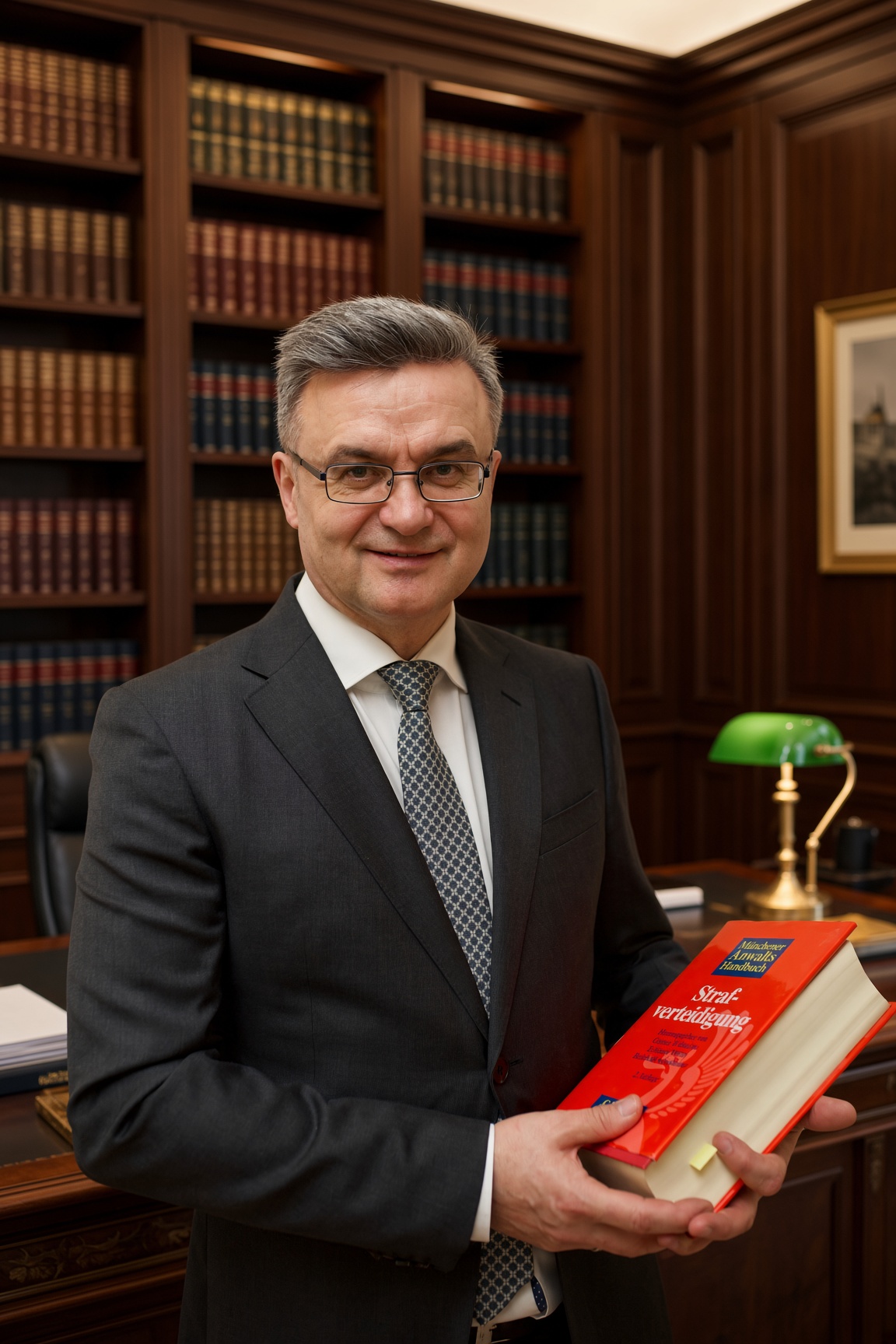
Our law firm has specialized for many years in family-law matters relating to divorce, paternity establishment, recovery of child and spousal maintenance, obtaining sole custody, and similar issues. To represent our clients' interests successfully and assert their legal position, it is necessary not only to rely on the law currently in force, but also to keep a close eye on the constantly evolving case law.
In this article, we would like to acquaint the reader with the most recent court decisions handed down in various family-law cases.
1. A parent's use of a child's money
Parents very often decide to open a separate bank account for their child, on which money is to be saved — the parents' own deposits, gifts from relatives for birthdays, Christmas, and so on — for the child to use in the future. The account holder is the child directly, but the parents, as the child's legal representatives, are also able to deposit funds into the account and withdraw money from it.
Legally, however, the child alone owns all the savings. Accordingly, where one of the child's parents, after a divorce and a move with the child into a different apartment, withdraws all the money saved in the child's savings account in order to buy children's furniture and clothing, that parent's actions are considered unlawful. The other parent, acting in the child's interest, is therefore entitled to file a lawsuit and demand reimbursement of the full amount withdrawn from the child's savings account.
Under current case law, children's furniture, clothing, and various household items for the child must be purchased by the child's parents out of their own funds, as part of the parents' statutory duty to support the child. For that reason, the child's own assets may not be used for the purposes described above. An exception to this rule may be recognized, for example, where paying for the child's driving lessons is at issue and the family has limited financial means.
2. Spousal maintenance where a new relationship has formed
Under the general rule set out in § 1569 of the German Civil Code (Bürgerliches Gesetzbuch), each spouse must, after divorce, provide for their own maintenance. The law does, however, recognize certain exceptions to this rule. For instance, § 1570 of the German Civil Code provides that a divorced spouse may claim maintenance from the other spouse where this is necessary because of caring for or raising a joint child, at least for the first three years after the child's birth. The duration and amount of the maintenance are determined according to the principle of equity.
Important at Divorce
Under the general rule set out in § 1569 of the German Civil Code (Bürgerliches Gesetzbuch), each spouse must, after divorce, provide for their own maintenance.
The court heard a case brought by a former wife seeking to require her former husband to pay her maintenance, since she was still on parental leave and not working. During the hearing it emerged that the claimant had, while still married, been in a relationship with another man, with whom she began living together immediately after formally separating from her husband. The claimant and her new partner had accordingly lived together for a little over a year, traveled together, celebrated family occasions together, and the child called the claimant's new partner "daddy." For that reason, the former husband's representative argued that continuing to pay maintenance in this case plainly conflicted with the principle of equity.
Having carefully heard the parties, the court concluded that the wife's maintenance claim should be refused under § 1579 no. 2 of the German Civil Code, which provides that maintenance may be suspended, reduced, or terminated where the former spouse claiming it has entered into a new, settled family relationship.
Case law often treats a new relationship as "settled" once two years have passed since the couple began living together. In this particular case, however, the court found the relationship to be settled on the basis of the circumstances described above.
3. The biological father's right of contact with the child
A particularly difficult situation arises where the mother of a child, having separated from her partner — the child's father — remarries and refuses to let the biological father see the child. Because the child regards the mother's husband as their father and does not know of the biological father's existence, the mother believes that contact with the biological father could have a negative effect on the child and disrupt the harmony of the family relationships that have formed.
The child's biological father, who had from the outset insisted on contact with the child and had lawfully requested information about the child's life from his former partner (§ 1686a of the German Civil Code), disagreed with this position and accordingly filed a lawsuit.
Having carefully examined the circumstances of the case, the court ruled that the mother's and stepfather's fears that contact with the biological father might negatively affect the child's psyche were not, on their own, sufficient grounds to deny the biological father his lawful right of contact with the child. Such fears must be substantiated by corresponding evidence.
Moreover, in cases such as this, where the parents' views diverge fundamentally, the child's own view on the possibility of contact with the biological father must also be heard.
The court accordingly concluded that once the child reaches an age at which they can process this kind of information, they should be properly informed of their true parentage, after which the child could then consider the possibility of contact with their biological father.
4. Each parent's right — and duty — to maintain contact with the child
The parents of two young girls decided to divorce. The children's mother tried to soften the fact that their father no longer lived with them and promised the girls he would visit them regularly. The girls' father, however, started a new family immediately after the divorce and, as a result, almost never visited the children from his first marriage. Their former wife periodically contacted him and asked him to visit the children at least on holidays, since they missed him greatly. She also sent her ex-husband cards and photographs the girls had made, in an attempt to keep at least some connection between them alive by that means.
Because the girls' father did not respond at all to his former wife's requests, the children's mother went to court, seeking an order requiring the children's father to maintain contact with them, since the girls were deeply upset that their father had abandoned them.
The court granted the mother's claim, holding that the law provides not only a right, but also a duty, for parents to maintain contact with their children. Accordingly, if a mother wants the father to take part in raising their joint children, she is entitled to demand this even through the courts.
Conversely, where a parent actively obstructs the other parent's contact with the child, or categorically refuses to allow such contact, current case law allows that parent to be held administratively liable.
Thus, under § 1626(3) of the German Civil Code, a child needs contact with both parents, as well as with other persons close to the child where such contact serves the child's development.
Consequently, if one parent forbids the other parent from seeing the child, that parent is thereby violating their parental duties. Such a parent may therefore be ordered by the court not only to allow the other parent contact with the child, but also to pay a corresponding administrative fine.
All rights reserved. Copying or republishing this article requires a link to the original source.