"Our homeland is like a mother.
As soon as you leave her, you feel — you were born."
Requirements for Obtaining the Status
Late resettler status requires proof of German ethnicity, a lasting attachment to German culture, and German proficiency at a family/native-speaker level (Section 6 BVFG).
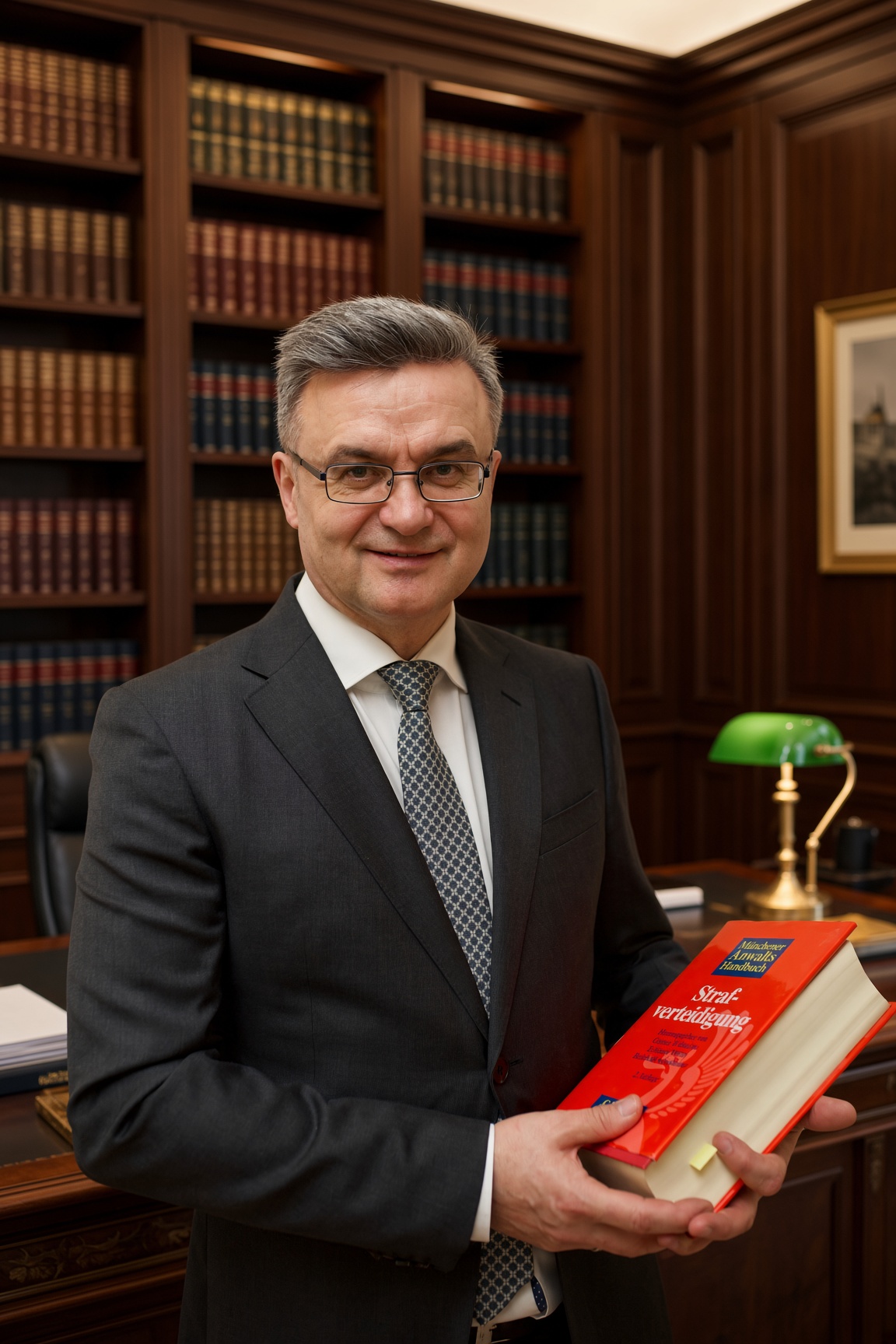
Dragan Ognjanović
Many of our readers have surely already heard more than once about a simplified citizenship program known as "Late Resettlers." The "Late Resettlers to Germany" program allows ethnic Germans, as well as persons of German ethnicity who left their homeland during or after the Second World War, to obtain German citizenship. The term "resettlers" (German: Aussiedler) first appeared after Germany passed the "Act on the Affairs of Displaced Persons and Refugees" in 1953. The law established the rules under which forcibly resettled Germans, German refugees, and ethnic Germans from Eastern Europe and the former Soviet republics were entitled to return to Germany permanently.
Before 1 January 1993, ethnic Germans who resettled in Germany were referred to as "resettlers" (German: Aussiedler); those who moved to Germany from 1993 onward came to be called "late resettlers" (German: Spätaussiedler), as laid down in Section 4 of the Federal Act on Expellees and Refugees (German: Bundesvertriebenengesetz, or Gesetz über die Angelegenheiten der Vertriebenen und Flüchtlinge, abbreviated BVFG). This is the official designation for resettlers in the official language used by government agencies.
The main requirements for obtaining late resettler status are the following:
· born before 1 January 1993;
· permanent residence in the areas of ethnic German settlement defined by law (the territory of the former USSR, excluding the Baltic states);
· German origin;
· belonging to the German people (German: Bekenntnis);
· conversational proficiency in German;
· no grounds precluding late resettler status under Section 5 BVFG (for example: privileges under the former communist regime and holding senior positions during the USSR era, support for the National Socialist regime, violations of other people's rights and freedoms, commission of serious crimes, etc.).
Family members of a person who has obtained Spätaussiedler status are also entitled to resettle in Germany if, for whatever reason, they cannot independently prove their own belonging to the German people. Spouses, children, grandchildren and great-grandchildren of Germans have this option. The law allows such status to arise only if the principal repatriate submits a corresponding application including family members. If the administrative authority approves such joint departure by issuing the relevant permit (Einbeziehungsbescheid), the family members will be recognized as late German resettlers to Germany. Note that the right to leave is a joint one: family members cannot move to Germany separately from the principal applicant.
Clients wishing to immigrate to Germany, whether as a family or on their own, turn to our law firm. In their work, our firm's attorneys specializing in immigration law encounter an enormous variety of personal circumstances. In such cases, a professional attorney's task is to identify every factor and aspect of material significance to the case and to devise the most effective strategy for achieving the intended goal quickly. The attorney then prepares and gathers all the necessary documents and oversees the process at the responsible authorities through to its successful conclusion. In this article, we describe one such story with a happy ending.
A family came to us consisting of a woman who had recently turned forty — let's call her Victoria. Victoria asked us to assist her with immigrating to Germany under the late resettlers program, and she planned to leave not alone but together with her adult daughter — let's call her Anna. Despite her fairly young age, Anna already had her own family, consisting of a husband and a newborn baby. We accompanied the process of preparing and submitting documents to Germany's Federal Office of Administration for resettler affairs (BVA). Victoria genuinely met the prerequisites for immigrating under this program, had an excellent command of German, and was able to provide evidence of her allegiance to the German people. As we had rightly expected, the case concluded successfully for every member of the family. As a result, we obtained the so-called "admission" decision (German: Aufnahmebescheid). The provisions of the law under which each family member was entitled to immigrate to Germany in the near future broke down as follows:
· our client Victoria, as the principal applicant, obtained late resettler status under Section 4 BVFG. On the basis of this status she was entitled to obtain citizenship upon arrival in Germany and completion of all formalities, to attend integration courses, to receive social benefits, to keep her employment record, to receive a "German" pension, and to live and work both in Germany and elsewhere within the European Union;
· Victoria's daughter Anna, included in the admission application, obtained corresponding status under Section 7 BVFG as a direct descendant of the principal applicant. After moving to Germany, she would have been entitled to the same benefits of her newly acquired status as her mother, except that her employment record would not be recognized in Germany;
· Anna's husband, whose marriage to her had lasted less than three years at the time the documents were submitted, was also included in the admission application as a family member of the principal applicant and received admission approval under Section 8 BVFG. This entitled him to move to and live in Germany as a foreign national, without the benefits described above available to resettlers admitted under a "higher" provision.
The exception in this case was Anna's newborn child, who was born after the documents had already been submitted for review and was therefore not included in the corresponding application. We were prepared to continue working to obtain a residence permit for Anna's child as well, but life, as it often does, intervened. A family conflict arose that went so far that Victoria informed her daughter and son-in-law that she had changed her mind about moving together and now intended to move to Germany alone. A few months later, this decision — motivated by reasons unknown to us — was carried out.
However, as we often joke in the course of our work, "a hundred troubles, one answer." This family's resettlement story did not end there. About a year after the events described, Anna approached us again for a consultation, still dreaming of reaching Germany and obtaining citizen status on her own. We checked whether she met the statutory prerequisites. Anna was born in April 1992, so she could still qualify for the coveted status — provided, of course, that every other requirement was fully met and the documents properly prepared. Having received the corresponding instructions, we again "rolled up our sleeves" and got to work. This time the principal applicant was the young woman herself, while her husband — whose three-year period of marriage had by then already elapsed — and their son were listed in the application as her closest relatives. A new, comprehensive set of documents was thus resubmitted to the BVA, and within less than a year from the start of the review, we received a positive response from the authority. This time, Anna herself obtained status under Section 4 BVFG, while her husband and son obtained status under Section 7. Although it took a second attempt, our clients ultimately secured the right to move to the country of their dreams, and could now confidently pack their bags and prepare for a new life, heading toward new horizons. They thanked us for our professional work and asked us to continue accompanying their integration process and the preparation of the necessary documents after the family's move to the country.
In closing, we would once again like to note that every immigration case is highly individual — what concluded successfully in one case will not necessarily go just as smoothly in another. Conversely, an attorney who objectively assesses the circumstances of a case from a professional standpoint can sometimes point the way forward even in what seems like a hopeless case, where the solution may not be obvious to a layperson. We wish all our readers success in their endeavors, and we remain always open to dialogue and to providing legal assistance on the finer points of obtaining the right to reside in Germany.
All rights reserved. Copying or republishing this article requires a link to the original source.